Product
UNDER SOD™
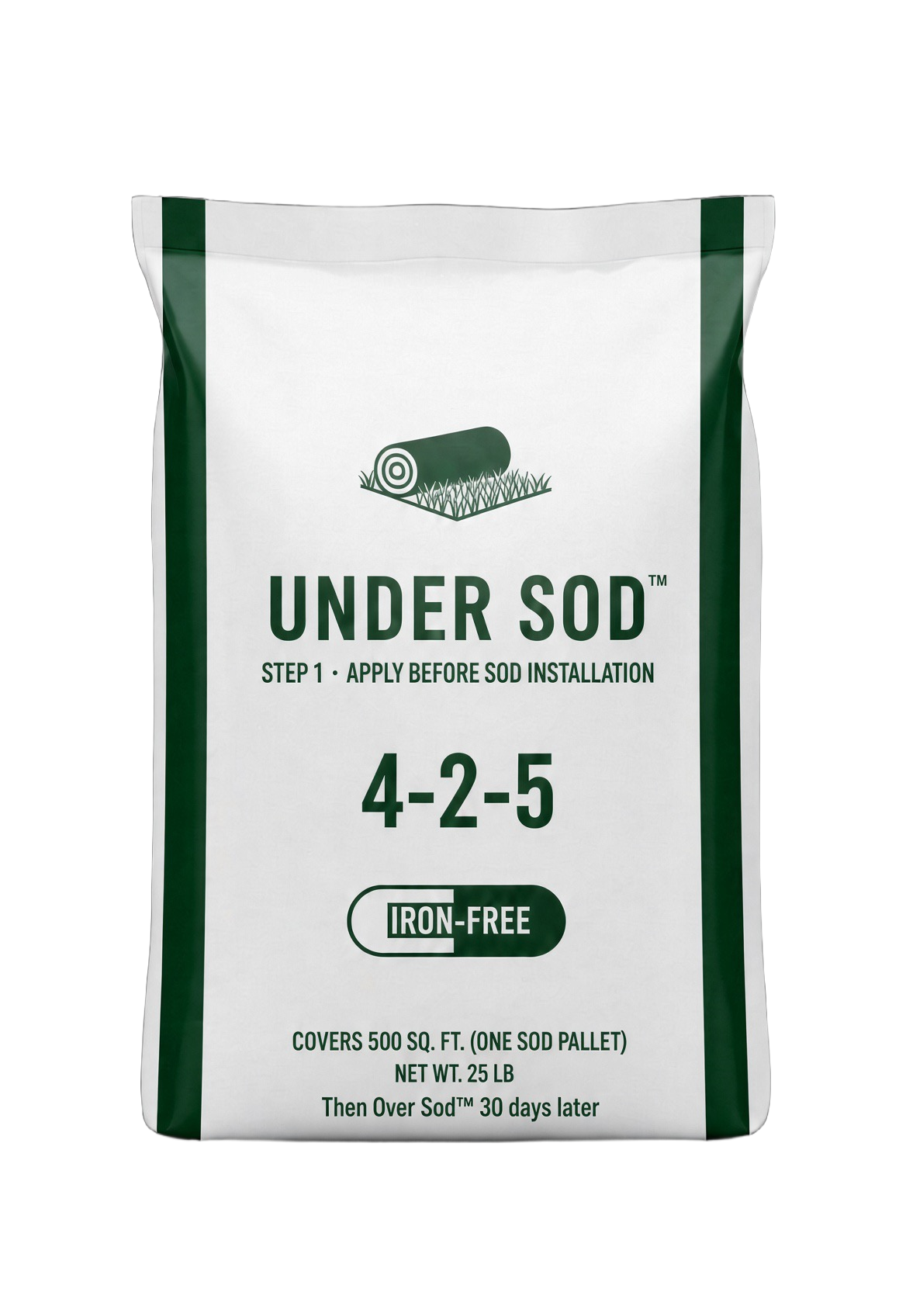
The 4-2-5, iron-free biological granular starter fertilizer built for the soil-to-root zone beneath new turf.
Specifications
Product Spec Sheet
| N-P-K Ratio | 4-2-5 (K-forward, moderate phosphorus) |
|---|---|
| Iron | None — iron-free by design |
| Endomycorrhizae | Four turf-specific endo species (Rhizophagus irregularis, Funneliformis mosseae, Glomus aggregatum, Glomus etunicatum) |
| Beneficial Bacteria | Bacillus PGPR consortium (B. amyloliquefaciens, B. megaterium, B. subtilis) |
| Trichoderma | T. harzianum / T. virens |
| Microbial Food | Carbohydrate / amino-acid carbon source |
| Seaweed Extract | 2% (Ascophyllum nodosum) |
| Humic Acid | 6% (leonardite-derived) |
| Fulvic Acid | Included (bioavailable carbon + chelator) |
| Granule Size | SGN 90 (fine) |
| Net Weight | 25 lb per bag |
| Coverage | 500 sq ft — one pallet of sod per bag |
| Application Timing | One pre-installation application, mixed into the top 4 inches of prepared topsoil before the sod goes down, up to 6 inches where the topsoil lift is deeper |
| Grass Types | All cool-season turfgrasses (KBG, tall fescue, RTF, ryegrass, fine fescues) |
| Availability | Spring 2027 — Northeast U.S. via the CT Sod network |
How Under Sod is applied
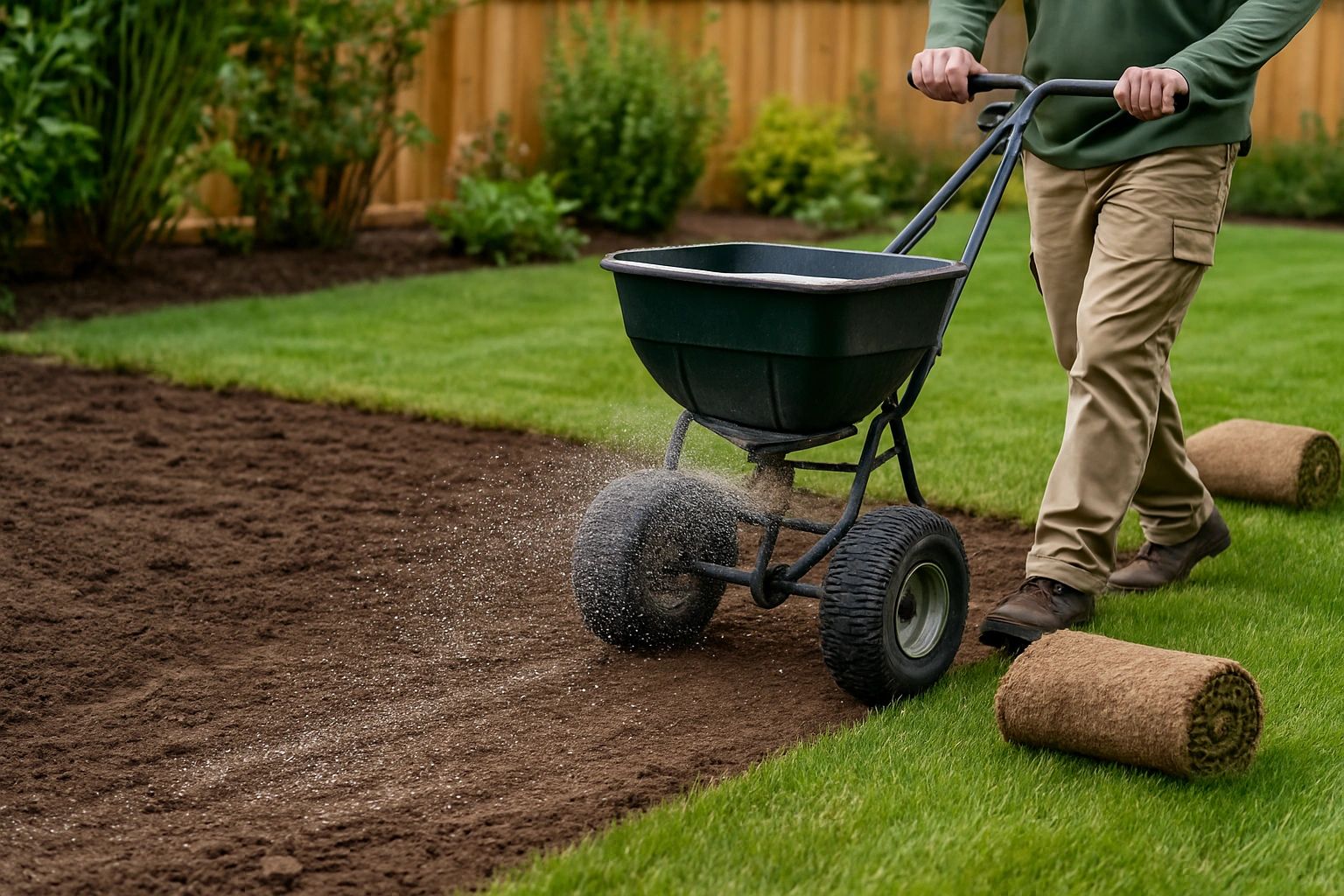
Under Sod goes into the soil, not on it. One 25-pound bag covers 500 square feet — one bag per pallet of sod. Spread the bag over the prepared topsoil and mix it into the top 4 inches with a tiller, harrow, or power rake, up to 6 inches where the topsoil lift is deeper. Finish-grade, lay the sod the same day, roll, and water. Once. It is not raked into the top inch, it is not a surface starter, and it is not reapplied.
Blended through the rooting profile, that bag delivers 2 pounds of nitrogen, 1 pound of phosphate, and 2.5 pounds of potash per 1,000 square feet — the amounts sit where the roots go, not where the salt would.
After install: leave the lawn alone for a month, then feed once at one month, then follow the normal seasonal schedule for your grass and region. If the one-month mark falls inside your state’s fertilizer blackout, wait for the first allowed date.
An acre is 87 pallets and 87 bags.
Why the rate is what it is
University turf programs have recommended a full dose of fertilizer worked into the soil before sod for forty years, and the depth they publish is 4 inches. Michigan State’s sod guide says to incorporate lime and fertilizer into the top 4 inches as the final grade is prepared, with a no-soil-test default of 10 pounds of 10-10-10 per 1,000 square feet — a pound each of nitrogen, phosphate, and potash. Its earlier sod bulletin called for 10 to 15 pounds of 5-20-20 per 1,000 into the upper 3 to 4 inches, which is 2 to 3 pounds of potash and 2 to 3 pounds of phosphate. Rutgers puts lime and fertilizer 4 to 6 inches deep and preplant fertilizer 3 to 4. Missouri tills amendments and fertilizer into the top 4 to 6 inches and then, as a separate second step, works a light starter into the top inch.
Under Sod is that first step, done at the depth and in the range they published. One bag per 500 square feet puts 1 pound of phosphate and 2.5 pounds of potash per 1,000 into the top 4 inches, inside the university preplant range, with the biology and the humic and seaweed fractions carried in with it.
The online calculators that tell you to rake 12 pounds of a 4-2-5 into the top inch are describing the universities’ second step without the first. The math is the same either way: 12 pounds raked into the top inch of 1,000 square feet is 12 pounds in about 7,000 pounds of soil. Fifty pounds mixed through the top 4 inches is 50 pounds in about 28,000 pounds of soil — the same concentration at the root, roughly a fifth of one percent by weight — and through 6 inches it is a third less. Same exposure per pound of soil; four times the depth of rooting profile carrying it. That is why Under Sod is incorporated and why the rate is a bag per pallet.
One bag, one pallet
Sod comes on 500-square-foot pallets. Under Sod is bagged to match. An acre is 87 pallets of sod and 87 bags of Under Sod. A 17,000-square-foot lawn is 34 of each.
After install
Leave the lawn alone for a month, then feed once at one month, then follow the normal seasonal schedule for your grass and region. If the one-month mark falls inside your state’s fertilizer blackout, wait for the first allowed date.
| Under Sod, mixed in | Surface-applied starter | |
|---|---|---|
| Where it goes | Blended through the top 4 inches of prepared topsoil before sod, up to 6 where the topsoil lift is deeper | On the soil surface, or raked into the top inch |
| When | Once, before the sod is laid | Before sod, then often again at two to four weeks |
| How much | One 25-pound bag per 500 square feet of sod, one bag per pallet | Pounds per 1,000 square feet by label, typically 10 to 20 for a 4-4-4 |
| Phosphorus | 2 percent | 4 to 25 percent, built for seed on bare dirt |
| Biology | Mycorrhizae, Bacillus, Trichoderma, humic and fulvic acid, seaweed, placed at the root zone | None, or left on the surface where it dries |
| Built for | The soil under transplanted sod | Germinating seed |
Where it goes
- Under Sod, mixed in
- Blended through the top 4 inches of prepared topsoil before sod, up to 6 where the topsoil lift is deeper
- Surface-applied starter
- On the soil surface, or raked into the top inch
When
- Under Sod, mixed in
- Once, before the sod is laid
- Surface-applied starter
- Before sod, then often again at two to four weeks
How much
- Under Sod, mixed in
- One 25-pound bag per 500 square feet of sod, one bag per pallet
- Surface-applied starter
- Pounds per 1,000 square feet by label, typically 10 to 20 for a 4-4-4
Phosphorus
- Under Sod, mixed in
- 2 percent
- Surface-applied starter
- 4 to 25 percent, built for seed on bare dirt
Biology
- Under Sod, mixed in
- Mycorrhizae, Bacillus, Trichoderma, humic and fulvic acid, seaweed, placed at the root zone
- Surface-applied starter
- None, or left on the surface where it dries
Built for
- Under Sod, mixed in
- The soil under transplanted sod
- Surface-applied starter
- Germinating seed
These are not two rates for the same product. They are two products for two jobs.
Application FAQ
What is Over Sod?
The second bag of the Under Sod system: a phosphorus-free surface feed applied one month after new sod goes in, planned as 8-0-6 with 2 percent non-staining iron, one 25-pound bag per four pallets. It ships in spring 2027.
Why does Over Sod have no phosphorus?
Because Under Sod already put the phosphorus a new lawn needs under the roll, mixed into the soil where the roots and the mycorrhizae are. A second dose on the surface a month later would suppress the fungi Under Sod placed, and on most Northeast soils it isn’t needed. Holding phosphate at or below 0.67 percent makes Over Sod phosphorus-free under Connecticut’s fertilizer law, which means it can be used at one month and again in any later season without a soil test.
How deep does Under Sod go?
Into the top 4 inches of prepared topsoil, up to 6 where the topsoil lift is deeper. That is the depth Michigan State and Rutgers publish for fertilizer before sod. It is mixed in with a tiller, harrow, or power rake before the finish grade, not raked into the top inch.
Isn’t 25 pounds per 500 square feet a lot for a 4-2-5?
It is the same concentration at the root as 12 pounds raked into the top inch, because it is mixed through four times the depth of soil. Fifty pounds per 1,000 square feet through the top 4 inches is 50 pounds in about 28,000 pounds of soil; 12 pounds in the top inch is 12 pounds in about 7,000. The potash and phosphate in that bag — 2.5 and 1 pound per 1,000 — sit inside the preplant range Michigan State has published for sod since 1983.
Can I put Under Sod down after the sod is laid?
No. It is built to be mixed into the soil the sod roots into. After install, leave the lawn alone for a month, then feed once at one month, then follow the seasonal schedule for your grass and region.
The Formula
One Rooting Strategy, Engineered Input by Input
Every component is included to do one job: help freshly cut sod rebuild roots fast and establish into a healthier, more self-sufficient lawn.
4-2-5
K-Forward NPK Base
Moderate, mostly slow-release nitrogen with deliberately low 2% phosphorus (to stay mycorrhizae-compatible) and elevated 5% potassium that drives drought, cold, and transplant-stress tolerance — feeding new roots without burning them or forcing top growth.
AMF
Named Endomycorrhizae
Four turf-specific endomycorrhizal species — Rhizophagus irregularis, Funneliformis mosseae, Glomus aggregatum, and Glomus etunicatum — colonize freshly cut roots and extend their reach through microscopic filaments, increasing water and nutrient uptake during establishment.
PGPR
Bacillus Consortium
A plant-growth-promoting Bacillus consortium — B. amyloliquefaciens, B. megaterium (phosphate-solubilizing), and B. subtilis (root colonization) — works the root zone to cycle nutrients and support recovery, fed by an included carbohydrate and amino-acid carbon source.
Live
Trichoderma
Trichoderma harzianum and Trichoderma virens colonize the developing root zone and lend establishment-phase support as the severed roots rebuild in unfamiliar soil.
2%
Seaweed Extract
Cold-water brown algae (Ascophyllum nodosum) delivers natural cytokinins and auxins that reduce transplant shock and trigger root initiation.
6%
Humic + Fulvic Acids
Leonardite-derived humates build cation exchange capacity and chelate micronutrients, while added fulvic acid — a smaller, highly bioavailable carbon molecule — shuttles nutrients straight into the root zone and feeds the soil biology.
Iron-free by design.
We root the sod. We don't green the bag. UNDER SOD™ contains no iron — a quick cosmetic color-up is something you can always add later, but rooting is the one decision that can't be redone once the sod is laid.
25 lb
Per bag
Granular SGN 90 formula in a single, ready-to-spread bag.
500 sq ft
One pallet of sod, one bag
No measuring, no math, no rate calculations. One bag covers one pallet.
Compatibility
Grass Types UNDER SOD™ Can Be Used With
UNDER SOD™ is built around the sod installation itself, so it works the same way across cool-season and warm-season sod.
Cool-Season Sod
- Kentucky bluegrass
- Tall fescue
- Bluegrass / fescue blends
- Perennial ryegrass blends
Ideal for Northeast, Midwest, transition zone, and other cool-season sod markets where root establishment and stress recovery are critical after installation.
Warm-Season Sod
- Bermudagrass
- Zoysiagrass
- St. Augustinegrass
- Bahiagrass
- Centipedegrass*
Built for the same establishment goal warm-season sod needs: stronger rooting, better soil contact, and reduced installation stress during active growing conditions.
*For centipedegrass and other low-input warm-season grasses, apply according to soil test recommendations or local fertilizer guidelines.
Availability
UNDER SOD™ launches Spring 2027.
Rolling out across the Northeast first through CT Sod's network (CT, MA, NY, NJ, RI, NH, VT, ME, PA) and select regional partners. Join the list to know the moment it's available in your area.
Get Notified