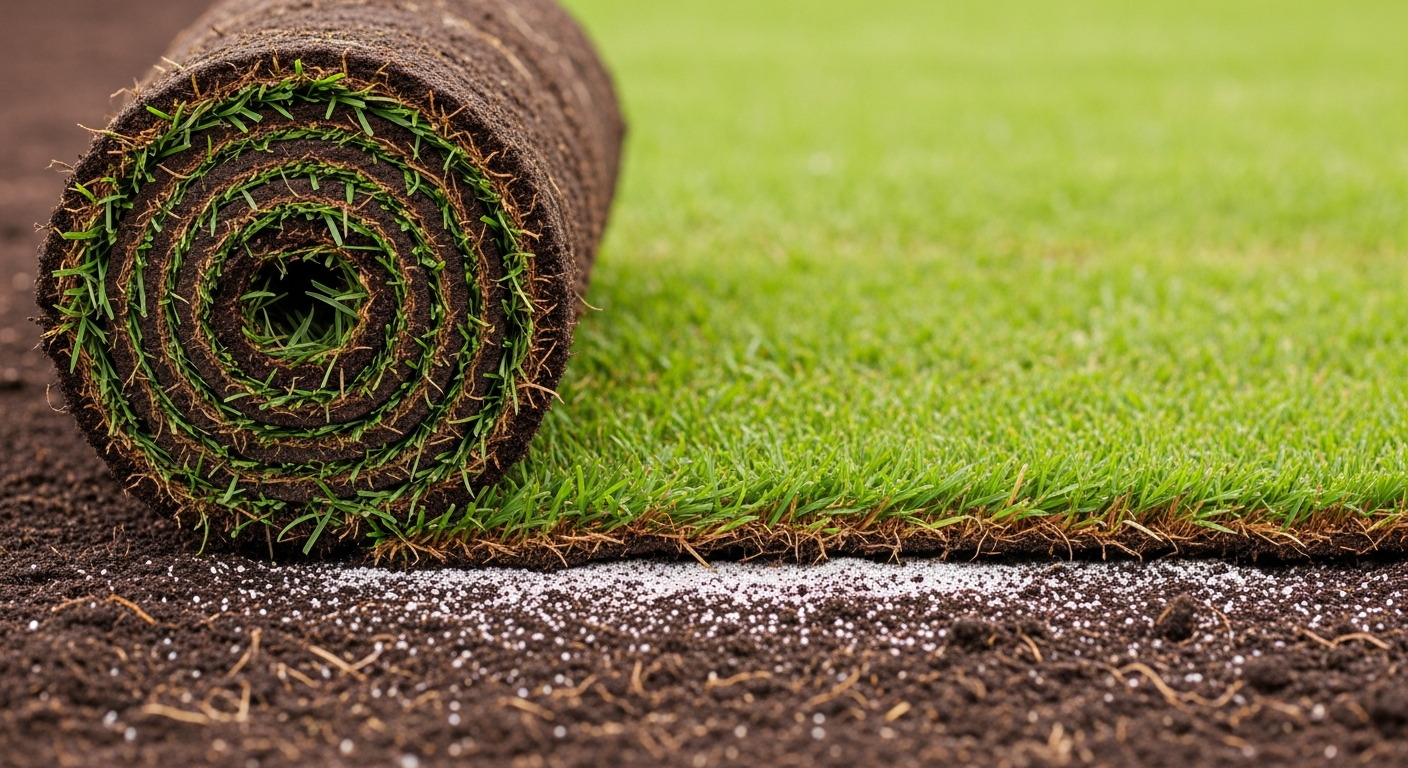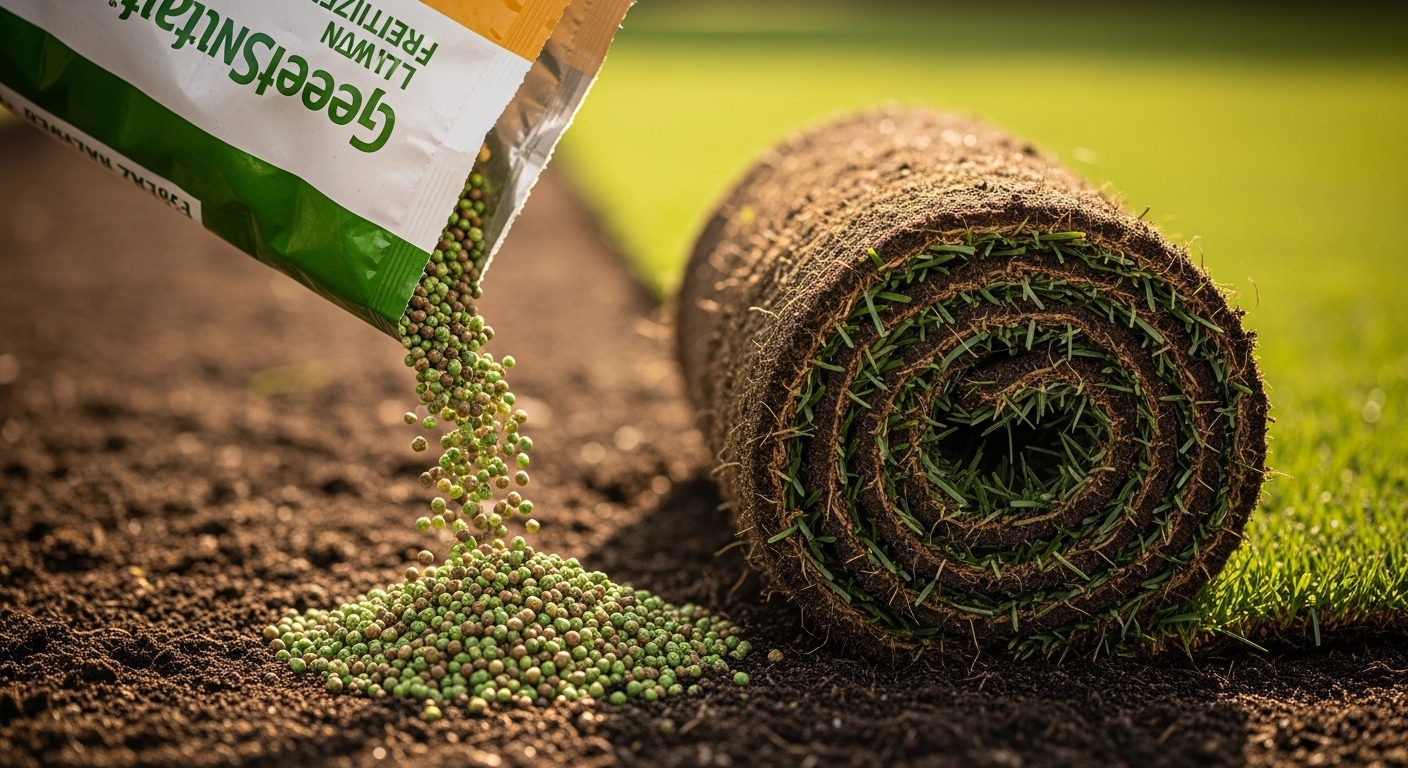
Best Fertilizer for New Sod: Why High-Phosphorus Starters Fail
The best fertilizer for new sod isn't the one with the biggest middle number.
Walk into any garden center and you'll be steered toward a high-phosphorus "starter" fertilizer — something like 18-24-12. The logic sounds reasonable: phosphorus drives root growth, and new sod needs roots. But the logic is a generation out of date.
What High Phosphorus Actually Does
Phosphorus is essential, but new soil almost always has enough of it already. When you pile on more and available P climbs past roughly 10 ppm, the grass stops investing in mycorrhizal fungi — the very partners that build a deep, drought-resistant root system.
In other words, the product sold to grow roots can quietly shut down the biology that grows the best roots. You get fast green color on top and shallow, needy roots underneath.
What New Sod Really Needs
- Moderate, K-forward nutrition — enough N-P-K to establish without spiking phosphorus, with extra potassium for drought and transplant-stress tolerance.
- Live mycorrhizal fungi — to extend the root system far beyond what the plant can reach alone.
- Humic acid — to build the soil chemistry that keeps biology thriving.
- Seaweed extract — to cut transplant shock during the first vulnerable weeks.
The takeaway
A moderate, biology-first formula beats a high-phosphorus starter for long-term sod health — every time.
That's exactly the gap UNDER SOD™ was built to fill: a low-phosphorus, K-forward 4-2-5 base paired with named mycorrhizae, a *Bacillus* + *Trichoderma* package, seaweed, and humic and fulvic acid — and it's iron-free by design, because we root the sod, we don't green the bag.