What Goes Under New Sod? The Complete Guide to Pre-Sod Soil Prep & Biological Starter Fertilizer (2026)
The single most important decision in a new lawn is made before the first roll of sod ever touches the ground — what you put underneath it.
Quick answer: what goes under new sod?
Under new sod, apply a low-phosphorus, biology-first product — about a **4-2-5 base with named endomycorrhizae, a *Bacillus* + *Trichoderma* biology package, humic and fulvic acid, and seaweed extract** — mixed into the top 4 inches of prepared topsoil before the sod goes down, up to 6 inches where the topsoil lift is deeper. Skip the old high-phosphorus starters (like 18-24-12): excess phosphorus suppresses the root-building fungi during the exact two weeks new sod needs them most.
Ask "what should I put under new sod?" and the research keeps pointing to the same answer: moderate nutrition plus living soil biology, not a high-phosphorus salt spike. This guide is the complete version of that answer, with the research behind it and the exact method to apply it.
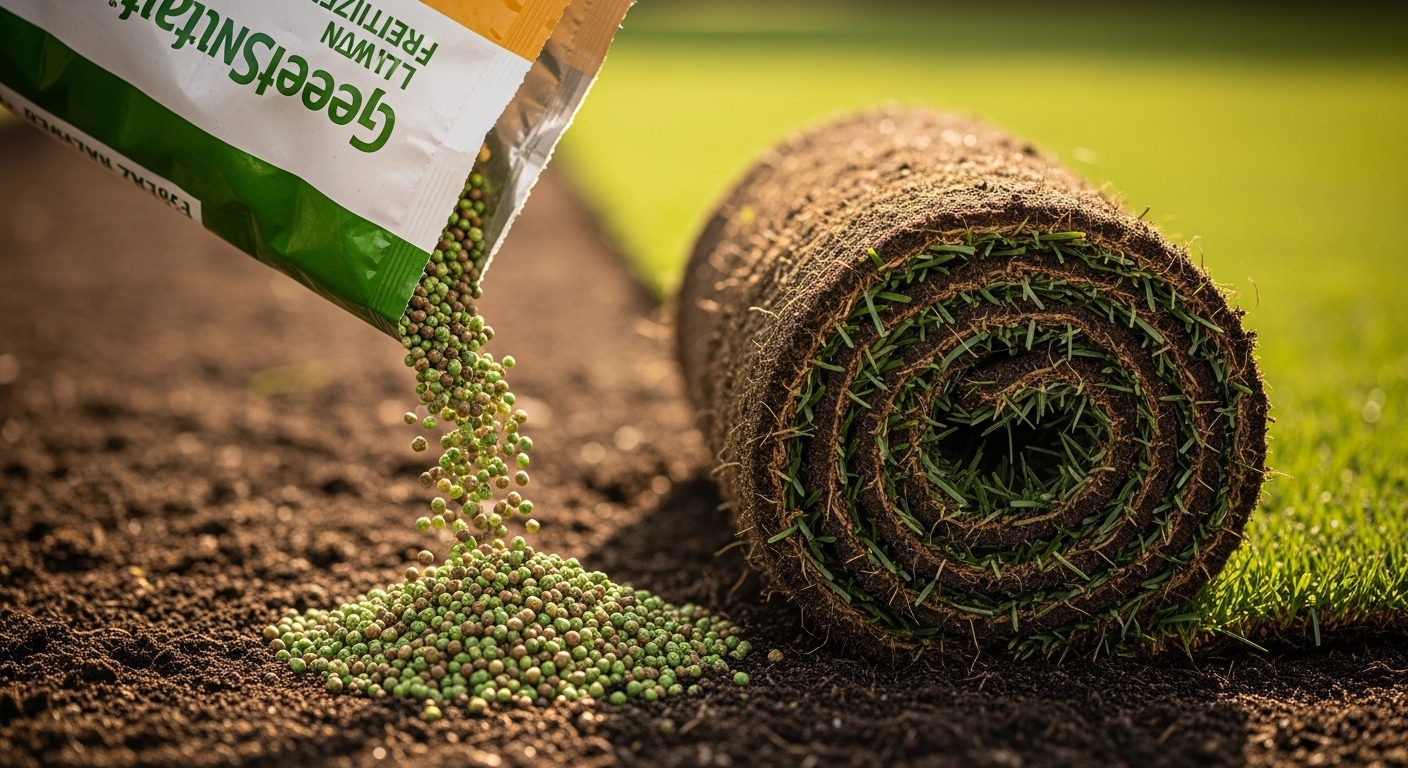
Putting biological fertilizer beneath new sod is exactly what the research keeps pointing to. UNDER SOD™ is the trademarked brand built specifically for that job — one 25 lb bag per 500 sq ft pallet, no math, no guesswork.
What Happens Underneath Freshly Cut Sod
When sod is harvested, it leaves most of its root system behind in the field. What arrives on the pallet is a dense mat of grass and thatch with only a thin slice of soil and a few short, severed roots. That grass is now a transplant patient: it has to grow an entirely new root system, fast, before it runs out of stored energy and water.
The soil directly beneath the sod is the only thing those new roots can grow into. If that zone is compacted construction fill with no biology, the sod will sit on top like a rug — green for a few weeks, then thinning and struggling. If that zone is loose, biologically alive, and lightly fed, the roots dive in and knit the sod to the ground in days. Everything depends on the 3–4 inches under the sod.
Sod fails or thrives in the root zone, not on the surface.
What you put under it is what it grows into.
The High-Phosphorus Mistake (And Why It Backfires)
For decades the standard advice was to reach for a high-phosphorus "starter" — 18-24-12, 12-25-12, or similar — on the theory that phosphorus drives root growth. It sounds logical. It is also a generation out of date.
Most freshly graded soil already holds enough phosphorus for establishment. Pile on more and you don't get more roots — you get a chemical signal that tells the grass to stop building its most valuable root partnership. We cover the full breakdown in Best Fertilizer for New Sod: Why High-Phosphorus Starters Fail, but here is the side-by-side:
| Factor | High-Phosphorus Starter (18-24-12) | Biological Under-Sod Starter (4-2-5 + biology) |
|---|---|---|
| Available phosphorus | Spikes well past ~10 ppm | Stays moderate, in the biological sweet spot |
| Mycorrhizal colonization | Suppressed — plant stops feeding the fungi | Encouraged — partnership forms early |
| Rooting in first 30 days | Shallow, dependent on frequent water | Deeper, self-extending root network |
| Top color vs. root growth | Fast green on top, weak roots below | Steady color with strong roots below |
| Drought & stress resilience | Low — roots can't reach moisture | High — fungal network reaches far beyond roots |
| Long-term soil function | Stays dependent on synthetic inputs | Builds living, self-sustaining soil |
| Application math | Rate charts, calculators, guesswork | One 25 lb bag per 500 sq ft pallet |
Factor
Available phosphorus
High-Phosphorus Starter (18-24-12)
Spikes well past ~10 ppm
Biological Under-Sod Starter (4-2-5 + biology)
Stays moderate, in the biological sweet spot
Factor
Mycorrhizal colonization
High-Phosphorus Starter (18-24-12)
Suppressed — plant stops feeding the fungi
Biological Under-Sod Starter (4-2-5 + biology)
Encouraged — partnership forms early
Factor
Rooting in first 30 days
High-Phosphorus Starter (18-24-12)
Shallow, dependent on frequent water
Biological Under-Sod Starter (4-2-5 + biology)
Deeper, self-extending root network
Factor
Top color vs. root growth
High-Phosphorus Starter (18-24-12)
Fast green on top, weak roots below
Biological Under-Sod Starter (4-2-5 + biology)
Steady color with strong roots below
Factor
Drought & stress resilience
High-Phosphorus Starter (18-24-12)
Low — roots can't reach moisture
Biological Under-Sod Starter (4-2-5 + biology)
High — fungal network reaches far beyond roots
Factor
Long-term soil function
High-Phosphorus Starter (18-24-12)
Stays dependent on synthetic inputs
Biological Under-Sod Starter (4-2-5 + biology)
Builds living, self-sustaining soil
Factor
Application math
High-Phosphorus Starter (18-24-12)
Rate charts, calculators, guesswork
Biological Under-Sod Starter (4-2-5 + biology)
One 25 lb bag per 500 sq ft pallet
The 10 ppm Phosphorus Threshold: What the Research Shows
Here is the mechanism in plain terms. Grass partners with mycorrhizal fungi — fungi that colonize the roots and, in exchange for a little plant sugar, extend the effective root system and ferry water and nutrients back. But the plant only invests in that partnership when it needs to.
When available soil phosphorus climbs above roughly 10 ppm, the grass decides the fungi aren't worth feeding and colonization drops or shuts down. A high-P starter pushes phosphorus right past that line at the exact moment a new transplant most needs the fungal network. You get the opposite of what the label promised.
This is why UNDER SOD™ uses a low-phosphorus, K-forward 4-2-5 base instead of a high-phosphorus spike. The full peer-reviewed breakdown lives in our deep dive on mycorrhizal fungi and new sod rooting and in the science library on ctsod.com.
The Four Things New Sod Actually Needs
Strip away the marketing and new sod needs four things in the root zone — moderate nutrition plus three biological inputs that conventional starters skip entirely:
- K-forward, moderate-phosphorus nutrition (a 4-2-5 base): enough N-P-K to establish without spiking phosphorus past the mycorrhizal threshold, with the raised potassium (5%) driving drought, cold, and transplant-stress tolerance through the shock window.
- Live mycorrhizal fungi: they extend the root system up to 1,000× and can deliver more than half the plant's phosphorus once colonized. See the partnership that changes everything.
- Humic acid: the soil-chemistry foundation that holds nutrients and builds habitat for biology — explained in humic acid and new sod establishment.
- Seaweed extract: natural cytokinins and auxins that cut transplant shock and trigger new root initiation in the first vulnerable days.
Each input is good alone. Together they compound — seaweed initiates roots, humic acid prepares the soil, the fungi extend the network. That synergy is the whole argument of the biological trinity. UNDER SOD™ is built on it and goes further — layering a *Bacillus* PGPR consortium, *Trichoderma*, and fulvic acid onto the same low-phosphorus, K-forward, iron-free base.
How to Apply Fertilizer Under New Sod (Step by Step)
The Pre-Sod Method
- Prepare the soil — clear debris and loosen the top 4 inches of prepared topsoil, up to 6 where the topsoil lift is deeper, before the final grading pass.
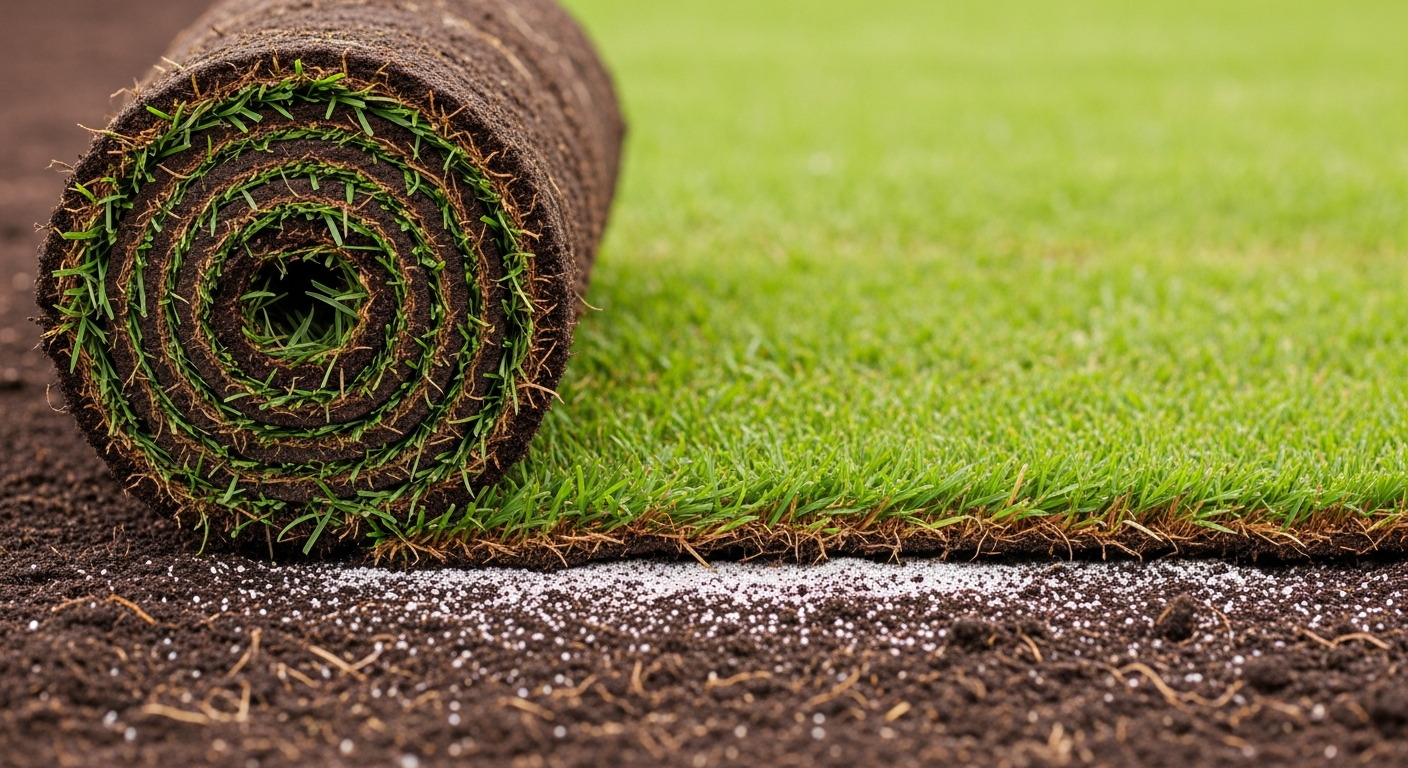
- Spread the under-sod starter — apply one full 25 lb bag of UNDER SOD™ evenly over each 500 sq ft pallet's worth of prepared soil.
- Work it in — mix the granules and live biology into the top 4 inches of prepared topsoil with a tiller, harrow, or power rake, up to 6 where the topsoil lift is deeper.
- Lay the sod immediately — stagger the seams like brickwork and butt the edges tight without stretching the rolls.
- Roll and water deeply — press for firm soil-to-sod contact, then apply about an inch of water the first day. Follow the first-three-weeks watering schedule from there.
For the full installation walkthrough beyond fertilizing, see how to install new sod the right way.
One 25 lb bag. One 500 sq ft pallet. Done.
No measuring, no calculators, no second-guessing the rate. The bag is sized to the pallet so the biology lands exactly where new roots form.
Timing: Before or After You Lay the Sod?
Under-sod starter goes down before the sod — that's the entire point. The biology has to be in contact with the soil the new roots grow into, not sitting on top of an established mat where it can't reach the root zone. Spread it over the prepared topsoil, mix it into the top 4 inches with a tiller, harrow, or power rake, up to 6 inches where the topsoil lift is deeper, then finish-grade and lay immediately.
- Under Sod method: mixed into the top 4 inches of prepared topsoil before laying sod, up to 6 where the topsoil lift is deeper.
- If you missed the window: do not surface-apply Under Sod after the sod is installed.
- Avoid: a heavy high-phosphorus surface feed on fresh sod — it spikes P without ever reaching the biology you want.
Regional & Seasonal Notes (Northeast Focus)
Cool-season lawns across the Northeast establish best with spring and especially fall installs, when soil is warm but air is cooling and moisture is reliable. Spring 2027 is the launch window for UNDER SOD™ through CT Sod's Northeast network and select regional partners — sized, tested, and ready when the season opens.
The biology-first approach matters even more on disturbed construction soil, which is common under new builds and renovations: it's often compacted, low in organic matter, and biologically dead. Humic acid and mycorrhizae give that kind of soil a living foundation a salt-based starter never will.
Homeowner, Contractor, or Dealer? Where to Start
- Homeowners planning a new lawn — join the notification list for first access and regional shipping alerts.
- Landscapers & installers — become an early contractor partner for first access and pricing, one bag per pallet.
- Sod farms, garden centers & distributors — carry UNDER SOD™ as a one-bag-per-pallet add-on and earn margin on every pallet.
Frequently Asked Questions
Do you really need fertilizer under new sod?+
Yes. Freshly cut sod loses most of its root system at harvest and has to rebuild it fast. A starter worked into the root zone gives it moderate nutrition plus the biology to root deeply. The mistake isn't using a starter — it's using a high-phosphorus one.
What is the best fertilizer to put under new sod?+
A low-phosphorus, biology-first starter — roughly a 4-2-5 base with named endomycorrhizae, a *Bacillus* + *Trichoderma* biology package, humic and fulvic acid, and seaweed extract. It establishes the sod without spiking phosphorus past the point that suppresses the root-building fungi, while the raised potassium supports drought and transplant-stress tolerance. UNDER SOD™ is formulated specifically for this pre-sod application.
Is high-phosphorus starter fertilizer good for new sod?+
No. Once available soil phosphorus rises above about 10 ppm, grass stops investing in mycorrhizal fungi — the partners that build a deep, drought-resistant root system. High-P starters give fast top color but shallow, water-dependent roots.
How much fertilizer do you put under a pallet of sod?+
With UNDER SOD™, one 25 lb bag covers one 500 sq ft pallet of sod. The bag is sized to the pallet so there's no rate chart, no calculator, and no risk of under- or over-applying.
Will fertilizer under sod burn the new roots?+
A moderate biological starter like a 4-2-5 won't burn roots the way a concentrated high-salt synthetic can. UNDER SOD™ uses a slow-release base plus living biology specifically so it's safe in direct contact with freshly cut roots.
Do you fertilize before or after laying sod?+
Before. Under Sod is mixed into the top 4 inches of prepared topsoil before the sod goes down, up to 6 where the topsoil lift is deeper. It is applied once and is not surface-applied after installation.
What's the difference between regular starter fertilizer and biological under-sod fertilizer?+
Conventional starters are salt-based and lean on high phosphorus for quick color. Biological under-sod fertilizer pairs moderate nutrition with mycorrhizae, humic acid, and seaweed to build a living root system and self-sustaining soil — better long-term establishment, less water dependence.
How soon will new sod root with a biological starter?+
With good soil contact and proper watering, you'll usually feel resistance to a gentle tug within about two weeks as roots take hold. The fungal network keeps extending reach well beyond that, which is what drives long-term drought resilience.
When does UNDER SOD™ launch and where can I get it?+
UNDER SOD™ launches Spring 2027 through CT Sod's Northeast network and select regional partners. Homeowners can join the notification list, and contractors and dealers can sign up for early access and pricing on sodfertilizer.com.
One bag. One pallet. Real rooting.
UNDER SOD™ — because the best lawns start underneath the sod. Join the notification list for the Spring 2027 launch.