How New Sod Roots: The Complete Timeline from Install to Established Lawn (2026)
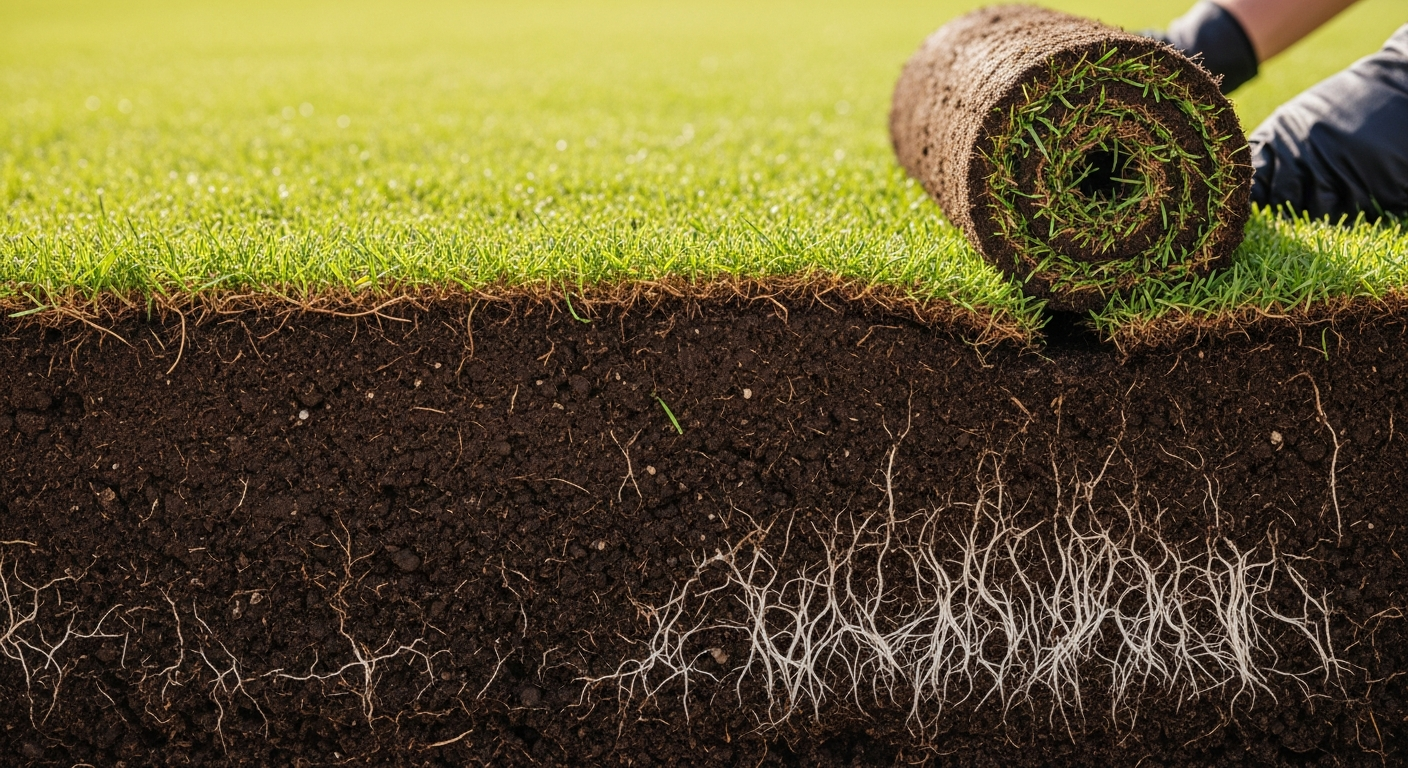
Freshly cut sod is a transplant patient that left most of its roots behind in the field. Whether it knits to your yard in days or sits on top like a rug comes down to one thing — how fast it can grow a new root system into the soil beneath it.
Quick answer: how long does sod take to root?
New sod grows initial shallow roots in 10–14 days, passes the tug test at 2–3 weeks, develops deeper structural roots in 30–45 days, and reaches full establishment in 6–8 weeks under good conditions. Mature root depth keeps developing through the first growing season and into year two. One of the biggest accelerators is living, biologically active soil in the root zone underneath the sod.
Search "how long does new sod take to root?" and you'll get a range of numbers. This guide is the complete version: the full timeline phase by phase, what is actually happening underground at each stage, and the watering, mowing, and feeding moves that match it.
It is the sibling guide to What Goes Under New Sod. That one covers what to put in the root zone; this one covers what happens next — and why the biology you lay down sets the pace for every phase below. Putting biological fertilizer beneath new sod is exactly what the research keeps pointing to, and UNDER SOD™ is the trademarked brand built specifically for that job.
The Rooting Timeline at a Glance
Here is the entire establishment process in one view. Each row is a window of time, what's happening in the root zone, and the move that matches it. The rest of the guide expands each phase.
| Timeframe | What's happening underground | What you should do |
|---|---|---|
| Hours 0–24 | Sod makes soil contact; severed roots rehydrate and biology wakes up | Lay tight, roll for firm contact, water ~1 inch |
| Days 1–7 | Transplant shock, then the first functional roots emerge (days 4–7) | Water 2–4× daily in short cycles; keep off the lawn |
| Days 7–14 | Roots penetrate the soil; the sod begins to anchor | Start the tug test ~day 10; water deeper, less often |
| Weeks 2–3 | Shallow root network fills in; the tug test passes | First mow at the highest setting; transition watering deeper |
| Weeks 4–8 | Deep, adventitious roots take over as the primary system | First feeding ~day 30 (balanced, not high‑N); ~1–1.5 in/week |
| Months 2–6 | Roots extend in depth; canopy thickens to full density | Normal mowing and feeding; resume full use |
| Months 6–12 | Full establishment continuing into the second season | Aerate only if needed (after 6–8 weeks min); seasonal care |
Timeframe
Hours 0–24
What's happening underground
Sod makes soil contact; severed roots rehydrate and biology wakes up
What you should do
Lay tight, roll for firm contact, water ~1 inch
Timeframe
Days 1–7
What's happening underground
Transplant shock, then the first functional roots emerge (days 4–7)
What you should do
Water 2–4× daily in short cycles; keep off the lawn
Timeframe
Days 7–14
What's happening underground
Roots penetrate the soil; the sod begins to anchor
What you should do
Start the tug test ~day 10; water deeper, less often
Timeframe
Weeks 2–3
What's happening underground
Shallow root network fills in; the tug test passes
What you should do
First mow at the highest setting; transition watering deeper
Timeframe
Weeks 4–8
What's happening underground
Deep, adventitious roots take over as the primary system
What you should do
First feeding ~day 30 (balanced, not high‑N); ~1–1.5 in/week
Timeframe
Months 2–6
What's happening underground
Roots extend in depth; canopy thickens to full density
What you should do
Normal mowing and feeding; resume full use
Timeframe
Months 6–12
What's happening underground
Full establishment continuing into the second season
What you should do
Aerate only if needed (after 6–8 weeks min); seasonal care
Before the Sod Arrives: The Head Start (or Handicap)
Rooting doesn't begin when the sod is unrolled — it begins 12 to 24 months earlier on the farm, where the grass grew a full root system integrated with that field's soil and biology. At harvest, the machine slices away nearly all of it, leaving a dense mat with only a thin skin of soil and a few short, severed roots.
That means the clock starts on your soil. The grass has stored energy for a sprint, and it has to rebuild a working root system before that energy and its moisture run out. Compacted, biologically dead construction fill is a handicap; loose, living, lightly fed soil is a head start. This is the entire argument for preparing the root zone — see What Goes Under New Sod and how to install new sod the right way.
The sod's old roots are gone at harvest.
The only thing it can grow into is what you put underneath it.
The First 24 Hours: Making Contact
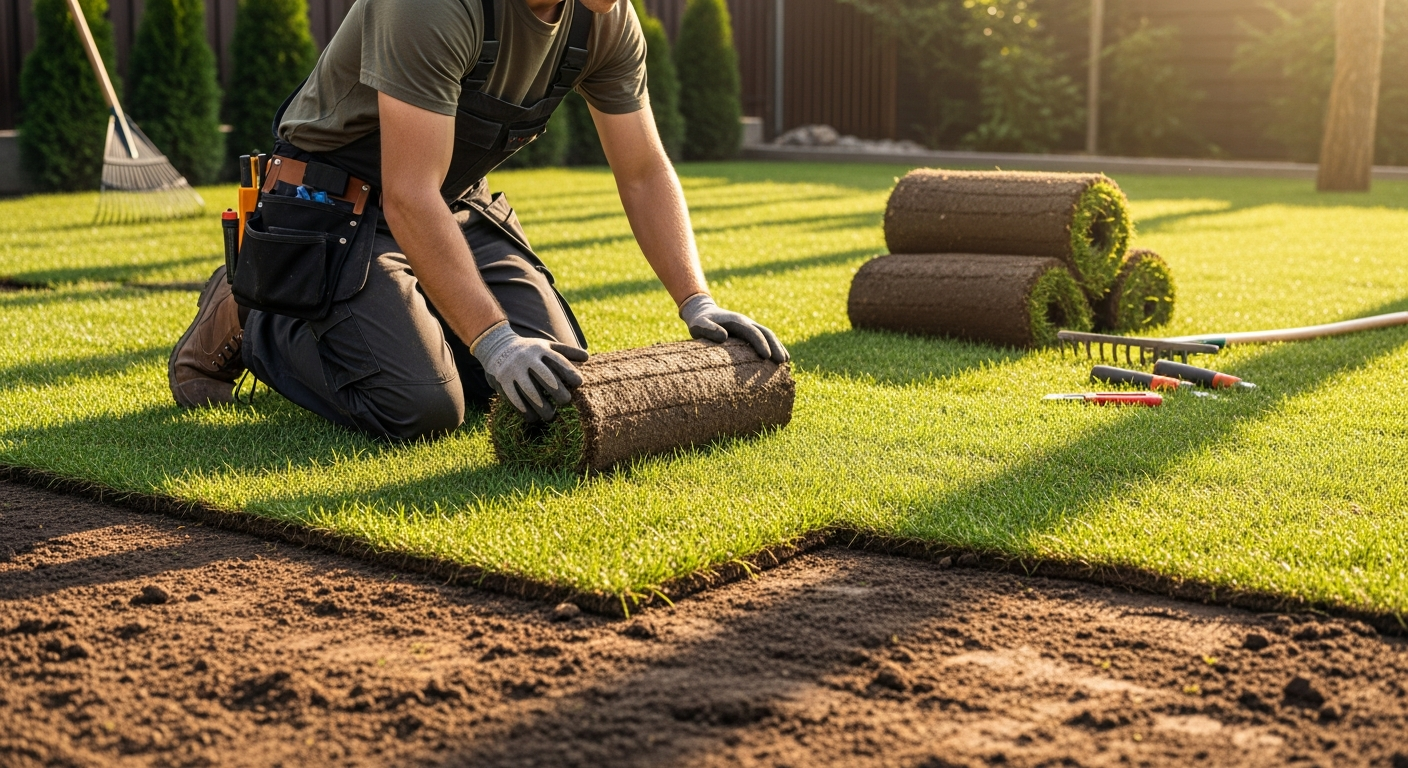
The first day is about one thing: soil-to-sod contact. Roots cannot cross an air gap. Sod laid over lumpy, dry, or unrolled soil bridges tiny pockets of air that roots never reach, and that patch lifts and yellows a week later.
- Lay tight — stagger the seams like brickwork and butt the edges without stretching the rolls.
- Roll it — pressing the sod into the soil removes air gaps and seats the roots against moist earth.
- Water deeply the same day — about an inch, enough to soak through the sod and into the top inch of soil below.
- Keep traffic off — every footstep in the first days creates the gaps you just rolled out.
Biology wakes up here too. Live mycorrhizal fungi and humic acid placed in the root zone before the sod went down begin colonizing and conditioning the soil in these first hours — the partnership explained in mycorrhizal fungi and new sod rooting.
Days 1–7: The Emergency Response Phase
For the first few days the grass is in transplant shock, living on stored energy and surface moisture. Some yellowing or dulling of color in this window is normal, not a failure. Around days 4–7 the first new functional roots emerge from the cut edges and crowns and begin probing the soil.
Watering carries the whole phase. The top inch of soil and the sod itself must stay consistently moist — typically 2–4 short waterings a day — because the root system isn't yet deep enough to find its own moisture. This is the most fragile week; the full schedule is in watering new sod: the first three weeks.
Days 7–14: Anchoring and the Tug Test
Now roots start penetrating the soil and the sod begins to anchor. The field check is the tug test: gently lift a corner. If it resists and stays put, shallow roots have taken hold; if it peels up easily, rooting isn't there yet. Test several spots — edges, corners, and the middle — because contact and moisture vary across a lawn.
As roots reach down, shift watering to deeper and less frequent so moisture sits a little lower each time. That trains roots to chase it downward instead of loafing at the surface — the foundation of a drought-tolerant lawn later.
Weeks 2–4: Shallow Roots Fill In and the First Mow
By weeks 2–3 the tug test passes across the lawn and the shallow root network fills in. This is the green light for the first mow — once, and only once, the sod resists being pulled up.
First-mow rules
- Wait for the tug test to pass — never mow sod that still lifts.
- Mow high — the highest setting, around 3 inches or more for cool-season grass.
- Follow the one-third rule — remove no more than a third of the blade height in a single pass.
- Use a sharp blade on dry grass — a clean cut, not a tear, on a lawn that isn't soggy.
Keep easing watering toward deeper, less frequent cycles through week 4. Light foot traffic is fine by now, but hold off on play, pets, and furniture until the lawn is fully anchored in weeks 4–6.
Weeks 4–8: Deep Roots Take Over (and the First Feeding)
The temporary roots that emerged first now hand off to the adventitious system — the deep, permanent roots that will carry the lawn for years. Structural roots reach 30–45 days of development, and by 6–8 weeks the lawn is fully established and ready for normal use.
This is when the first fertilizer belongs — around day 30 or later. Sod arrives pre-fed from the farm, so feeding too early (especially high-nitrogen) forces blade growth at the expense of roots, producing a weak, shallow lawn. Use a balanced formulation, not a high-nitrogen or high-phosphorus starter — the reasons are laid out in best fertilizer for new sod: why high-phosphorus starters fail.
Why the under-sod biology pays off now
The deep-rooting phase is exactly when mycorrhizae earn their keep — extending the effective root system far beyond the roots themselves and ferrying water and phosphorus back. Sod started over living soil reaches this stage faster and roots deeper. That synergy is the biological trinity of mycorrhizae, humic acid, and seaweed.
Hold off on aeration. Aerating before roots are firmly established disrupts the network — wait 6–8 weeks at minimum, and many lawns are best left until the second growing season.
Months 2–12: From Established to Mature
After full establishment the lawn keeps developing in depth and density. Roots extend downward through months 2–6, the canopy thickens, and the grass settles into normal mowing and feeding. How deep roots ultimately go is species-dependent: Kentucky bluegrass typically tops out around 4–8 inches, while mature tall fescue can reach 2–3 feet — depth that builds progressively over the first year and into year two.
That depth is what separates a resilient, low-maintenance lawn from a needy one. The deeper the root system, the more soil moisture it can reach, the less it depends on you, and the better it shrugs off summer heat and drought.
How the Season Changes the Timeline
Soil temperature drives rooting speed, so the same sod roots on very different schedules depending on when it goes down:
- Early fall (best for cool-season grass): soil around 60–70°F drives fast root growth with little heat stress, and the lawn catches both the fall and the following spring rooting seasons before its first summer.
- Spring (second best): reliable moisture and warming soil, though the lawn faces summer before it's deeply rooted.
- Summer: shallow roots can appear in 5–15 days, but heat stresses the plant and demands intensive watering.
- Winter: initial rooting can stretch to 20–30 days and is generally avoided in cool climates.
Spring 2027 is the launch window for UNDER SOD™ through CT Sod's Northeast network and select regional partners — timed to the season cool-season lawns root best. You can read the regional science library on ctsod.com.
Why Sod Sometimes Won't Root
If the tug test still fails after about three weeks, the cause is almost always one of these — and most trace back to the first 48 hours or the soil underneath:
- Poor soil contact — inadequate rolling left air gaps the roots can't cross.
- Under-watering — the root zone dried out before roots established.
- Over-watering — saturated soil starved developing roots of oxygen.
- Compacted or dead subsoil — roots can't penetrate, and there's no biology to help.
- Fertilizer applied too early — high-nitrogen or high-phosphorus feeds before day 30 push top growth and suppress rooting.
Homeowner, Contractor, or Dealer? Where to Start
- Homeowners planning a new lawn — join the notification list for first access and regional shipping alerts.
- Landscapers & installers — become an early contractor partner for first access and pricing, one bag per pallet.
- Sod farms, garden centers & distributors — carry UNDER SOD™ as a one-bag-per-pallet add-on and earn margin on every pallet.
Frequently Asked Questions
How long does it take for new sod to root?+
Under good conditions, sod develops initial shallow roots in 10–14 days, deeper structural roots in 30–45 days, and a fully established root system in 6–8 weeks. Mature root depth keeps developing through the first growing season and into year two.
How can I tell if my sod has rooted?+
Use the tug test: after 10–14 days, gently lift a corner of the sod. If it resists and stays firmly connected to the soil, shallow roots have established. Test several spots — edges, corners, and the middle. Easy lifting in multiple places means rooting isn't complete yet.
When can I mow new sod?+
Typically 2–3 weeks after installation, once the tug test passes. Mow at the highest setting (about 3 inches or more for cool-season grass), follow the one-third rule, use a sharp blade, and mow when the grass is dry. Never mow before the sod resists being pulled up.
When should I fertilize new sod?+
Wait about 30 days after installation for the first feeding. Sod arrives pre-fertilized from the farm, and feeding too early — especially high-nitrogen — forces blade growth at the expense of roots. The decisive fertilizer choice actually happens before the sod goes down, in the root zone underneath it.
How much water does new sod need?+
Week 1: 2–4 short waterings a day to keep the sod and top inch of soil moist. Weeks 2–3: shift to daily or every-other-day, soaking deeper. By week 4: 2–3 times a week, totaling about 1 to 1.5 inches. This progression trains roots to grow deeper.
Can I walk on new sod?+
Light, occasional walking is fine from day one to water and monitor it. Avoid sustained traffic for at least 2–3 weeks, and hold off on play, pets, and furniture until weeks 4–6 when the lawn is fully anchored. The tug test is the best signal for when normal use can resume.
Why is my new sod turning yellow?+
Some yellowing in the first 1–2 weeks is normal transplant shock. Beyond that it usually points to watering (too little or too much), heat stress on a summer install, or — later, at 2–6 weeks — fungal disease. Check your watering and the pattern of discoloration first; most transplant-related yellowing resolves as the lawn establishes.
What season is best for installing sod?+
Early fall is best for cool-season grass: soil around 60–70°F drives strong rooting with minimal heat stress, and the lawn catches both fall and the following spring before its first summer. Spring is second best. Summer is possible but stressful, and winter roots very slowly.
Why hasn't my sod rooted after 3 weeks?+
Common causes are poor soil contact from inadequate rolling, under-watering, over-watering (oxygen starvation), compacted or biologically dead subsoil, or fertilizer applied too early. Most of these trace back to the first 48 hours or to the soil prepared underneath the sod.
Should I aerate new sod?+
Not in the first 1–2 months — aerating before roots are firmly established disrupts the developing network. Wait at least 6–8 weeks, and many lawns are best left until the second growing season for a first aeration.
Does mycorrhizae really speed up rooting?+
Research consistently shows mycorrhizal fungi accelerate turfgrass establishment, especially in soils low in natural fungal populations like construction sites and heavily managed lawns. That's why UNDER SOD™ puts live mycorrhizae in the root zone before the sod goes down.
Roots start underneath. So does UNDER SOD™.
Every phase above moves faster over living, lightly fed soil. UNDER SOD™ — one 25 lb bag per 500 sq ft pallet, built for the root zone beneath new sod. Join the notification list for the Spring 2027 launch.